
Wildlife & sustainability
Set in 8.5 acres of land and featuring a mix of native broadleaved trees, formal lawns and shrub borders with large expanses of wild flower and grass meadows surrounded by ancient semi natural woodland. Seating areas allow time for rest and reflection.
Our team of dedicated groundsmen ensure that a wide variety of trees, plants and wildlife thrive throughout the year.
Some areas of our grounds may appear unkempt at certain times of the year. For example, the grass may be left long and vegetation uncut. This is to protect nesting birds and create natural habitats that are more favourable for wildlife, such as butterflies and bees.
Sustainability and the Environment
At The Oaks we are committed to developing and managing the crematorium in a responsible and sustainable manner, supporting Southern Co-op’s vision of working together to make a positive difference to the local economy, the environment and our communities across the South of England.
The Building
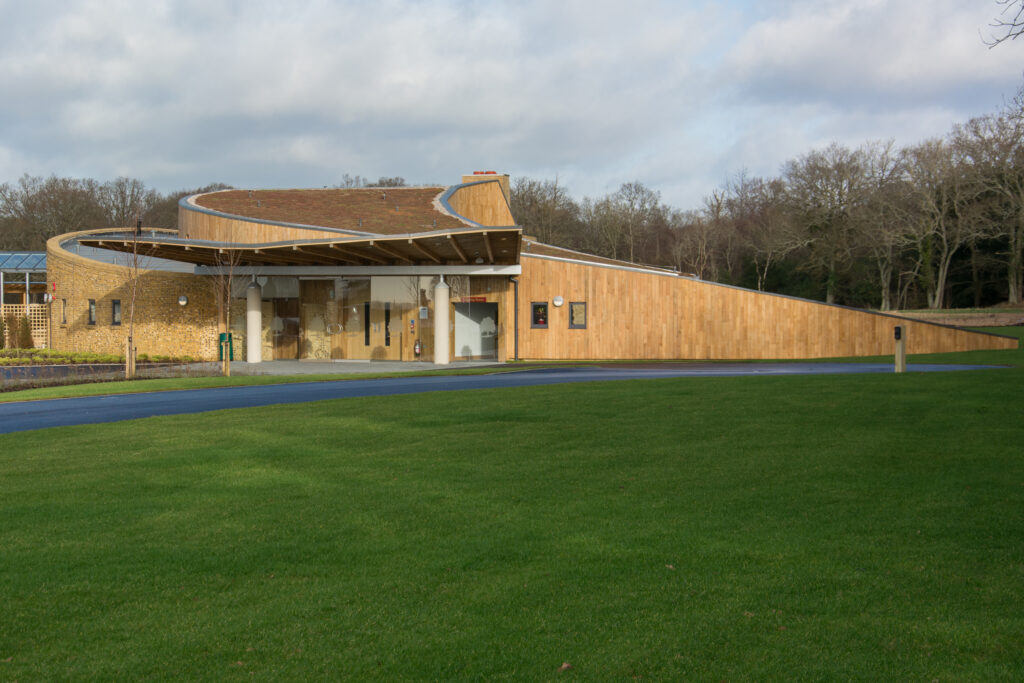
The Oaks Crematorium has been built to the highest environmental standards, employing the latest techniques in cremation and clean air technology to prevent pollution to the air and surrounding environment. The low rise building has native oak cladded walls, with traditional local flint and brickwork and boasts a green sedum ‘living’ roof which provides additional habitat for wildlife.
Sustainability was an important factor in the design of the building. Low level energy efficient lighting minimises light pollution and the design team delivered a sustainable heating and cooling solution for the Crematorium building.
The main chapel uses passive ventilation, whereby cool fresh air is naturally drawn in at low level on the eastern side of the building (pre-warmed during the cooler months), and expelled at high level on the western side.
These low-energy systems will significantly reduce the overall energy demand of the building helping to reduce its environmental footprint. Through our energy procurement arrangements, the building’s electricity is sourced from renewable sources.
Within our car-park, there are electric car-parking charging points for our clients and visitors to use.
The Grounds
Surrounding and within the extensive grounds of the Crematorium is ancient semi-natural woodland, designated as a Site of Importance for Nature Conservation (SINC).
To the northeast of the site there is a shaded naturally draining pond which provides sanctuary for a locally very rare heathland species called Floating Clubrush (Eleogiton fluitans). This is only the fourth known location for this species in southeast Hampshire. The clubrush forms roots on the pond bed when the pond is dry and when the pond naturally fills with rainwater, its roots detach and it ‘floats’ on the top of the water, re-attaching its roots when the pond naturally dries out again. In another area of the site an attenuation pond provides further wildlife habitat.
The development of the site has involved converting poor quality agricultural land used for grazing, into various enriched habitats. The Crematorium has been working with the Hampshire and Isle of Wight Wildlife Trust since its development and opening, to protect and enhance the environment, creating additional habitats for wildlife, such as wildflower meadows and. sensitively clearing and enhancing the pond area with the planting of native woodland flowers and marginal pond species like flag iris. We also own and host a number of beehives.
Recent tree planting and landscaping works to create additional memorial areas blend seamlessly with the woodland surroundings offering a tranquil and natural visitor experience. The wildflower and grass meadows in particular provide a haven for pollinators like bees and other wildlife, including rarer species of butterfly such as the orange tip, small copper and comma butterflies, white and buff-tailed bumblebees and green, field and meadow grasshoppers. The site also provides foraging and commuting opportunities of many bat species, including recordings of the rare barbastelle bat.


Nearby
Southern Co-op also owns and manages the five-acre woodland plot next door to The Oaks Crematorium which we hope will provide a sensitively designed extension to the crematorium’s natural memorial areas
The woodland has previously been managed as sweet chestnut coppice, where the tree stems are harvested on a three to 15 year rotation to make various timber products. All the trees felled in early 2021 along the roadside works were sweet chestnut trees and the stools are being integrated back into the wider coppicing rotation. All the significant old trees will be conserved and protected as will all the other flora and fauna.
Since 2013 we have been working with Hampshire and Isle of Wight Wildlife Trust to protect and enhance the environment at The Oaks and the Trust is now helping us understand the ecological value of the woodland and will be supporting us in developing a vision which will prioritise wildlife and the site’s natural assets, to complement the work we’ve undertaken at the crematorium.


